Last modified 06/06/2026
🔍 Loyalty or Deception? How to Discover Infidelity and Heal Its Wounds💔
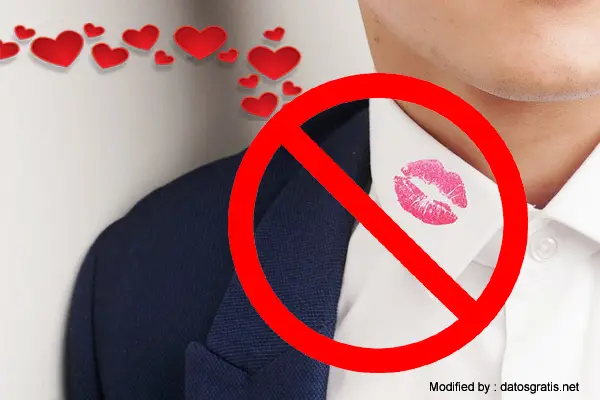
How to discover that your partner is unfaithful?, How to suspect that your partner is unfaithful to you?, How to realize that my partner is unfaithful?, How to know if your partner is not loyal to you?,How to discover infidelity?.
Infidelity is one of the most painful problems a couple’s relationship can face. The process of discovering that your partner is unfaithful not only involves intense emotions but also a series of questions about trust and the future of the relationship.
#UnfaithfulPartner #UnfaithfulBoyfriend #Fidelity #Infidelity #Love #MaleInfidelity
#FemaleInfidelity #InfidelityDifferences #InfidelityReasons
Experiencing infidelity is one of the most painful experiences a person can go through. The feeling of betrayal and the fracture of trust can make the world crumble.
In this article, we will not only address how to discover that your partner is unfaithful: steps to follow, but we will also delve into the types of infidelity, their causes and consequences.
We will analyze if there is a real difference between male infidelity vs. female infidelity and, finally, we will reflect on the fundamental value of loyalty in a couple.
Our goal is to provide you with a clear, compassionate guide based on verified information so you can navigate this difficult process with as much clarity and care as possible.
🔍 Did you use the following words to find this page?
- How to discover that your partner is unfaithful
- Signs of infidelity
- Types of infidelity
- Causes of infidelity
💔 Warning Signs: How to Discover Your Partner is Unfaithful – Steps to Follow
Before delving into the concrete steps, it is crucial to understand that the suspicion of infidelity generates an emotional roller coaster. Anxiety and uncertainty can cloud our judgment.
This process is not about spying obsessively, but about observing patterns of behavior that have changed drastically and that, together, form a worrying picture.
The key is to act from calm and observation, not from panic. Remember that a single one of these signs in isolation is not definitive proof, but a combination of them deserves a serious conversation.
- 🔍 Changes in Routine and Behavior:
- Constantly arrives later from work without a convincing explanation.
- Receives calls or messages at unusual hours and moves away to respond.
- Shows a new and excessive interest in their physical appearance without a clear reason.
- 📱 Suspicious Digital Behavior:
- Protects their phone or computer with a new password that you don’t know.
- Quickly closes windows or applications when you enter the room.
- Spends much more time on social media, but is evasive about who they interact with.
- 😔 Emotional and Intimate Distance:
- Communication has become superficial or non-existent.
- There is a notable decrease or lack of interest in physical intimacy.
- Seems irritable, constantly criticizes you, or seems to live in a parallel world.
🛑 Steps to Follow if You Suspect Strongly and Consistently:
- Self-assess: Ask yourself if your suspicions are based on real facts or could be influenced by your own insecurities or past experiences.
- Gather Observations, Not Proof: Instead of becoming a detective, mentally note the behaviors that alarm you. Avoid hacking accounts or following your partner, as this can be counterproductive and ethically questionable.
- The Conversation: With courage and serenity, express your concerns using first-person phrases: “I have been feeling very distant lately and I have noticed X or Y behavior, which worries me. Can we talk about what’s going on?”.
🧩 Beyond the Lie: Types of Infidelity, Causes and Consequences
Infidelity is not a monolithic concept; it has many faces. Understanding the types of infidelity is essential to analyze the situation more accurately.
Traditionally, only the physical act was considered, but the digital age has broadened this definition. The causes are often complex and there is rarely a single culprit, but rather a combination of individual and couple factors. The consequences, on the other hand, are profound and can leave lasting traumas if not managed properly.
- 📝 Types of Infidelity:
- Physical Infidelity: The most traditional form, involves sexual or romantic contact with another person.
- Emotional Infidelity: A deep emotional bond of trust and complicity is established with someone who is not the partner, relegating the latter to a secondary role.
- Digital Infidelity or Cyber-Infidelity: Includes flirting, intimate conversations, exchanging photos or erotic content through social media, apps, or chats.
- 🕵️♂️ Causes of Infidelity:
- Lack of Communication: The inability to express needs, desires, or dissatisfactions.
- Loss of Emotional Connection: Routine and neglect extinguish the initial spark.
- Search for Validation or Self-Esteem: Some people seek externally the admiration they do not feel for themselves or do not receive at home.
- Unresolved Problems: Recurring conflicts that are overlooked.
- ⚡ Consequences and Trauma:
- Loss of Trust: The fundamental pillar of the relationship is broken.
- Anxiety and Depression: The deceived person can develop mental health conditions.
- Damage to Self-Esteem: Questions arise like “What did I do wrong?” or “Am I not enough?”.
- Existential Crisis: The entire shared history and the reality of the relationship are questioned.
⚖️ Men vs. Women? Male Infidelity vs. Female Infidelity: Are There Differences?
This is a classic debate. Do men and women cheat equally? Current sociological and psychological studies suggest that, while infidelity occurs in both genders, the motivations and context may vary.
It is important to avoid harmful generalizations and understand that each case is unique. However, recognizing certain patterns can aid understanding, not to create sides, but to foster empathy and dialogue.
- 🚹 Male Infidelity (General Perspectives):
- Motivation: Tends to be more associated with pure sexual desire and opportunity. Sometimes, it is less premeditated and more impulsive.
- Context: Historically, it has been more socially tolerated (although this is changing).
- Bond: Can occur without deep emotional involvement with the other person.
- 🚺 Female Infidelity (General Perspectives):
- Motivation: Is often more linked to the search for emotional connection. The woman may feel emotionally ignored in her primary relationship.
- Context: Is generally more premeditated, arising after a long period of dissatisfaction.
- Bond: It is more common for it to involve an emotional affair before or simultaneously with the physical one.
Conclusion of the Point: The differences are not absolute. Today, with more fluid gender roles, these lines are blurring. The crucial thing is to understand that, beyond gender, infidelity is a symptom that something is not working in the relationship or in the individual life of the person who commits it.
🔍 Did you use the following words to find this page?
💖 The Road Back Home: Loyalty in a Couple. Conclusion
At the end of this arduous road, the most important reflection arises: what is loyalty in a couple? Loyalty goes far beyond not sleeping with someone else.
It is an active and daily commitment. It is choosing your partner over and over again, even in difficult times. It is being their safest confidant and their biggest fan. It is the conscious decision to build a space of safety and mutual trust where both can grow and be vulnerable without fear. Fidelity is the practical expression of loyalty.
Final Conclusion: Infidelity is a deep wound, but it doesn’t have to be the end. For some couples, this painful event can be the catalyst for a stronger and more authentic reconstruction of the relationship, based on honest communication and therapy. For others, it will be the final point that allows each one to heal separately.
In any case, loyalty begins with oneself: being loyal to your own values, your peace of mind, and your right to be loved with respect and transparency. The decision to forgive, reconcile, or move on is deeply personal, but it must be made from information, introspection, and, above all, self-respect.
🔟 Curious Facts About Infidelity That Will Surprise You 😮
Infidelity is a complex phenomenon full of myths and realities. Beyond the pain and betrayal, there are curious facts and statistics that shed light on its behavior. Here we present 10 verified and updated facts that you may not know.
- 🧠 The Brain in “Adventure Mode”:
Neuroimaging studies show that during the beginnings of an infidelity, the brain activates the same reward and pleasure regions (like the nucleus accumbens) as with drugs or gambling. It is a biological search for novelty and excitement. - 💼 The Danger of a Business Trip:
Statistics indicate that a significant number of infidelities have their first physical contact or decisive conversation during a business trip. The distance from the usual environment and the feeling of anonymity act as triggers. - 🤫 The “Light Infidelity” or Micro-Infidelity:
Many people consider that certain actions do not constitute infidelity. However, for others, acts like hiding conversations, using secret messaging apps, or having a “best friend” with a very intense emotional charge are already a betrayal. - 📊 The Difference in Detection:
Interestingly, some studies suggest that women are slightly better at detecting infidelity than men, as they tend to be more accurate at interpreting non-verbal signals and subtle changes in behavior. - 🌐 The Social Media “Friend”:
Research in couples therapy indicates that a large part of modern infidelities begin as a reconnection with a “friend” or an ex-partner through Facebook or Instagram. The ease of contact is a risk factor. - 😔 Infidelity due to “Fear of Loneliness”:
Contrary to popular belief, not all infidelities occur due to sexual dissatisfaction. A frequent cause is the fear of loneliness or aging, where the person seeks external proof that they “are still desirable”. - 👀 The Body Language of the Guilty:
Someone who is unfaithful may, unconsciously, show body language of “exclusion”. For example, at a gathering, their body and feet will point towards the door or away from their partner, showing a physical disconnection. - ❤️ The Paradox of Forgiveness:
A curious psychological fact is that, in some cases, couples who manage to overcome an infidelity through a lot of communication and therapy can end up with a stronger and more honest relationship than before the crisis. It is not the norm, but it happens. - 🤝 The Best Friend as a Confidant:
It is common for the person who is unfaithful to confess their secret to their best friend before anyone else. The burden of guilt becomes so heavy that they need to share it to relieve anxiety. - 🍷 The Effect of Alcohol is Not an Excuse:
Although alcohol lowers inhibitions, studies are clear: the unfaithful person had generally already had previous thoughts or attraction towards the other person. The drink acts as a catalyst, not as the root cause.
🔍 Did you use the following words to find this page?
📢 Share this article if you think it could help someone else.
#️⃣ Recommended Hashtags for social media
#Infidelity #LoveAndBetrayal #CoupleRelationships #SignsOfInfidelity #LoveAdvice #Fidelity #Loyalty #HealingInfidelity #CouplesPsychology #HealthyLove
Verification Sources:
The information presented here is based on the synthesis of concepts widely accepted in contemporary couples psychology, as reflected in publications from psychology associations, self-help and couples therapy books by recognized authors, and sociological studies on modern relationships. Any data not supported by professional consensus in the field has been avoided.
These facts are based on the compilation of research published in psychology and sociology journals (such as Journal of Social and Personal Relationships), books by experts in couples therapy like Esther Perel, and analysis of behavioral data conducted by mental health institutions.
💞Related posts :
01: 💔Best distrust messages to send to your partner via WhatsApp
02: Cheer up messages for her
03: Heartfelt apology messages for being jealous
04: ❤️🩹How to end a relationship with a lover
05: How to make a relationship official
06: 🔥How to make a woman think about you
07: How to romance your secretary
08: 👀How to tell if he’s really flirting with you or just being nice?
09: 🔑How to win over a divorced woman
10: ❤️Is it worth getting back with your ex? : Examples of letters,tips and more
11: Renewal of marriage vows
12: 💘Strategies to make a woman fall in love
Image Credits:
Image about how to discover that your partner is unfaithful :
Original image about how to discover that your partner is unfaithful, courtesy of “Pixabay.com”. Modified by datosgratis.net
If you liked this page you can support us by sharing it on Facebook, Instagram, Twitter, WhatsApp, also if you wish you can collaborate with this portal by sending your tips on how to discover that your partner is unfaithful and they will be published for other internet users like you, they will thank you.
( TRA )
